The New NHS plan for carers
The new action plan is based on three strands, RECOGNITION, REFERRAL, and REACH.
The new plan for unpaid carers arrives wrapped in warm language and digital optimism, beneath the branding, it is painfully clear how little has actually changed
Recognition.
The strategy centrepiece is built on “recognition” but there is little clarity on responsibility. An unpaid carer can now identify themselves in the NHS App, and a “Carers Charter” ill outline expectations. These steps sound progressive, but they are also the cheapest, least disruptive reforms available.
Unpaid Carers have never suffered from lack of recognition, we have suffered from a lack of support, rights and resources and resources and resources. A digital badge in the NHS App does not lighten the load of someone providing round-the-clock care, for a parent with dementia, a child with severe disability or a partner suffering with a chronic disease such as MS. It simply makes our invisibility more efficiently documented.
Referral.
The plan promises earlier referrals to help, be it financial help, workplace rights and wellbeing services. But it does not increase Carers' Allowance or expand those entitled to do. It does not address the chronic delays and administrative hurdles unpaid carers face.
This is the central flaw: the Government is improving the map without improving the destination. Unpaid Carers will be guided more quickly – to the same underfunded, overstretched support they already struggle to access.
Digital notifications, cross-department information sharing, and streamlined signposting are helpful, but they are not structural reform so desperately required. They are customer service improvements to a system that is fundamentally broken.
Reach
The plan’s 3rd pillar “reach” promises better workplace flexibility, improved identification of young carers and more supportive educational settings. However, these rely almost entirely on voluntary action from employers and schools.
There is no enforcement mechanism, no new funding, and no accountability. The Government urges carers to “reach their potential” yet offers little more than guidance documents and polite requests to employers.
This is not ambition; it is aspiration without commitment
Verdict
The Unpaid Carers Action Plan, is presented as a landmark moment, but it is ultimately a low-cost, low-risk document, that avoids confronting the real crisis: unpaid carers are holding up the care system that depends on our labour whilst offering us minimal financial, emotional and practical support,
The plan recognizes unpaid carers but fails to empower us. It streamlines referrals but does not strengthen what unpaid carers are referred to. It encourages ambition but does not fund it.
Unpaid Carers deserve more than digital recognition and improved signposting. We deserve a care system that values our labour protects our wellbeing and invests in our future. Until the Government confronts that reality, this plan will remain a symbolic gesture and not a solution. NP 12/08/2026
Support for Unpaid Carers
If you provide unpaid care for a family member, friend or neighbour who could not manage without your help, you are an unpaid or informal carer. The NHS and its partners recognise the vital role carers play and are committed to supporting your health, wellbeing and ability to continue caring.
Registering With Your GP as a Carer
Why register?
Telling your GP practice that you are a carer means your caring role is recorded on your medical record. This helps your GP team understand the pressures you may be under and offer more tailored support. Common benefits include:
· Being offered flexible or joint appointments (for example, back‑to‑back appointments with the person you care for)
· Signposting to local carers’ support and community services
· Support with your own physical and mental health
· Access to vaccinations and health checks where appropriate
· Help with referrals for a carers assessment, benefits advice or social prescribing support
How to register
You can usually register as a carer by:
· Completing a carers registration form on your GP practice website, or
· Asking at reception for a carers registration form and returning it to the practice
Once registered, the practice can discuss what support may be helpful for you.
Herts Careline
The subsidised price you pay for your Herts Careline service includes:
Monitoring and answering of all calls, made from your alarm equipment, by our call operators at our 24/7 Hertfordshire Control Room.
If you’re using digital equipment, all your call charges made from your equipment when it is activated are included in the price.
Response Services, such as the British Red Cross and Early Intervention Unit, to visit your home to check on you if you’re unable to speak to us when you activate your equipment, or if your contacts are not available to check on you.
Maintenance of your equipment if you experience an issue or have a question.
A free key safe and medical alert card
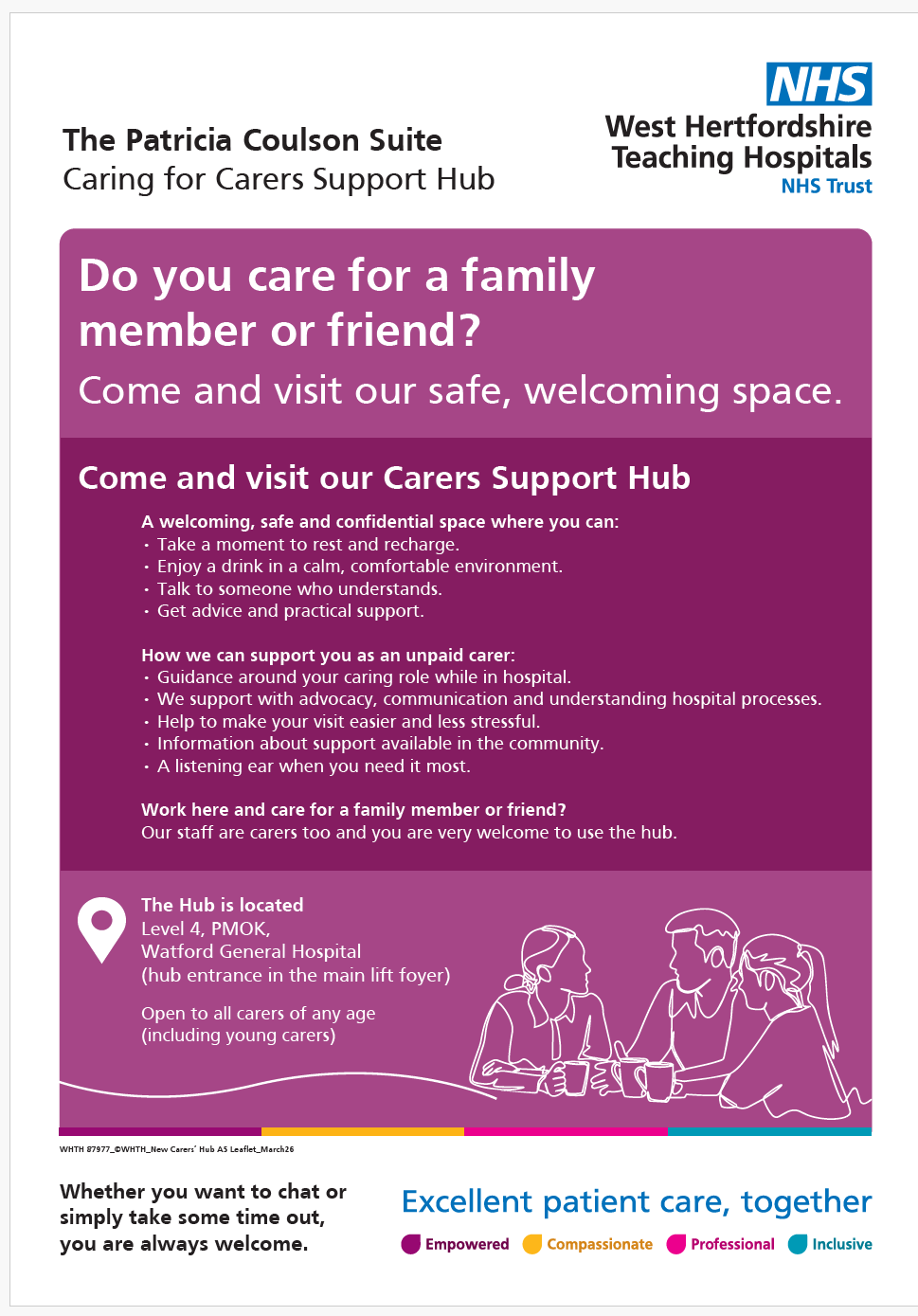
Carers Champion at Your GP Surgery or Service
Many GP practices and NHS services have a Carers Champion (sometimes called a Carers Lead). This is a member of staff who:
· Acts as a named point of contact for carers
· Helps ensure carers are identified and supported
· Links with local carers organisations and support services
How to find your Carers Champion
· Ask your GP reception team who the Carers Champion is
· Check your GP practice website or noticeboard for carers information
Availability and roles may vary by surgery or service