Did Not Attends in Hertfordshire : A Continuous Improvement Project
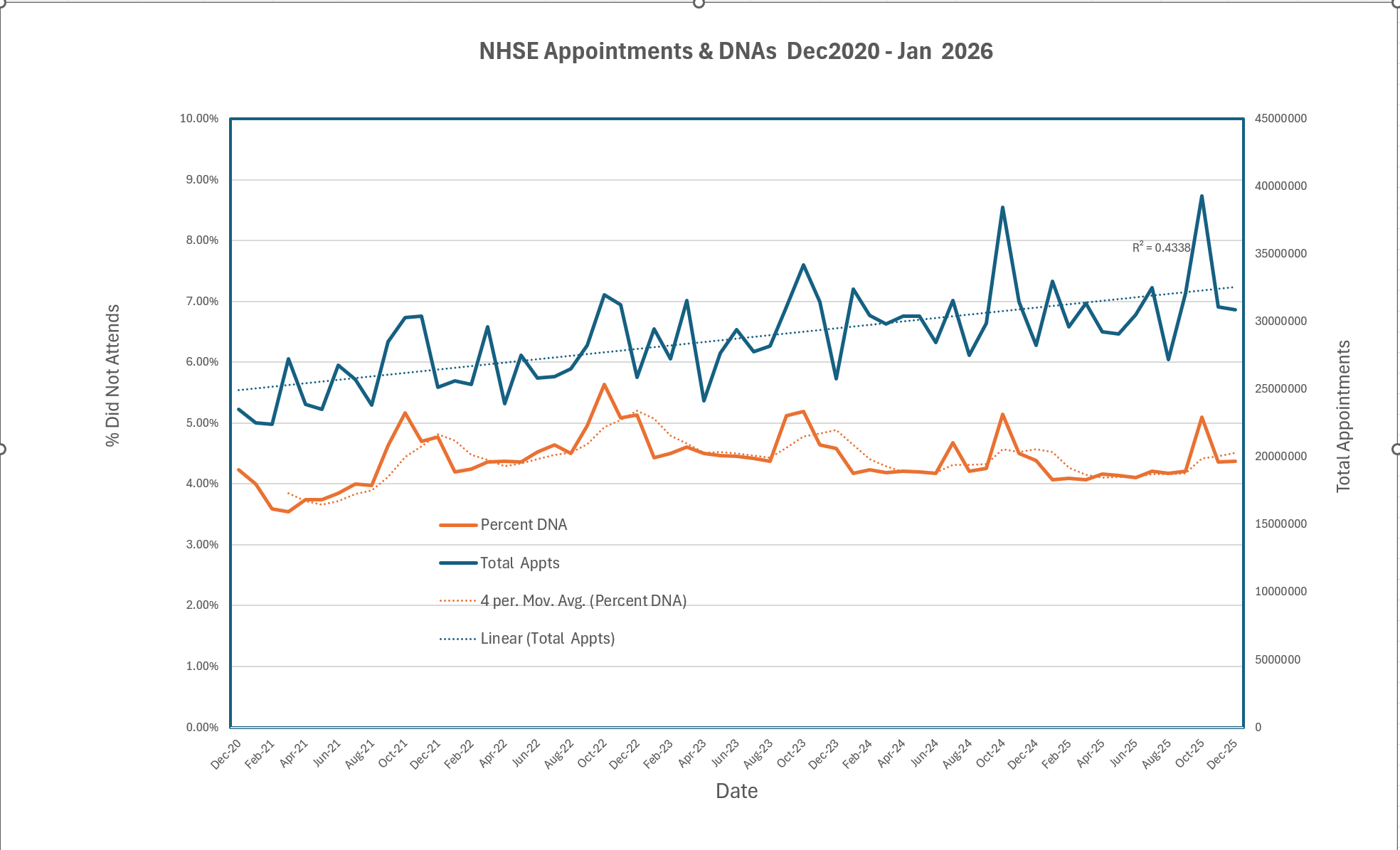
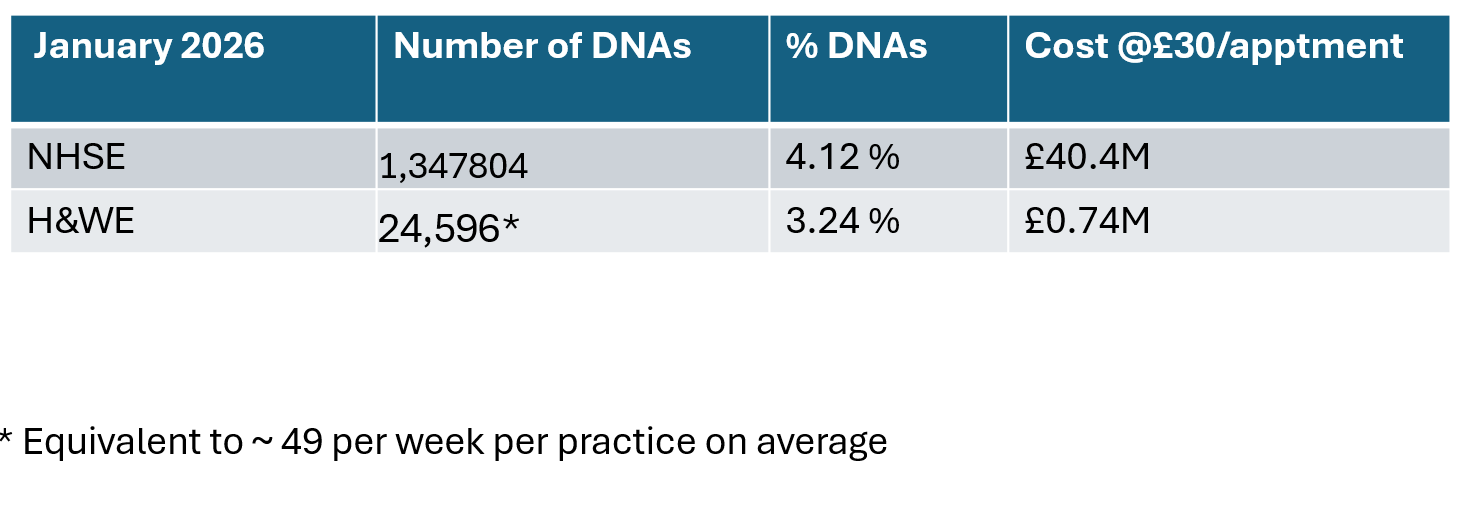
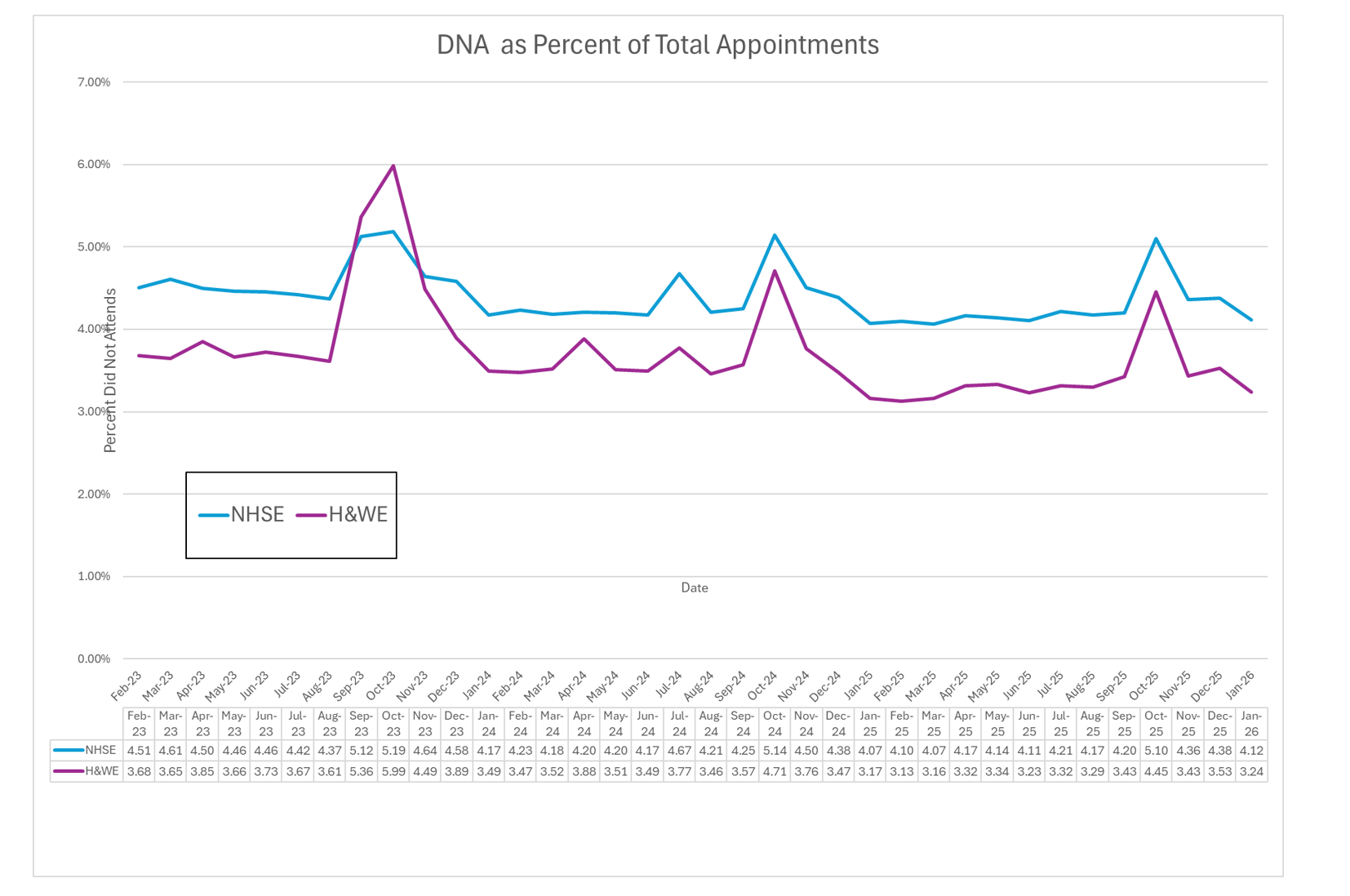
The learnings from this project have been shared extensively across Herts and West Essex, with NHS London and with other PPGs nationwide. The table above shows how low a level of DNAs can be achieved.
Did you miss it??
Nearly 1 in 4 people have missed an NHS appointment because they forgot or arrived too late, according to a new survey.
The NHS has launched a new campaign urging people to turn on ‘push alerts’ from the NHS App so they get reminders about appointments and can rearrange any they can’t make, helping to free up millions of appointments for others.
Read more about the Tap the App solution
When a patient has made an appointment at their GP surgery and does not attend, and also does not tell the Surgery they cannot attend, then that becomes a Did Not Attend (DNA) statistic. At a time when getting to see your Primary Care practitioner is still a priority for so many patients a 4% level of DNAs or 1 in 25 failed appointments is a real waste of resources.
In April 2024 a PPG in Rickmansworth Herts got together with the Practice staff and Clinicians in a Continuous Improvement project intending to understand the causes of their DNAs and implement solutions to reduce the high level to below the national average.
The team followed the DMAIC project approach i.e.
Define the Problem: Surgery levels of DNAs were over twice the national level as reported on the General Practice Appointments Database (GPAD)
Measure the problem: Data showed the levels to be high and consistent for several months
Analyse the problem: Brainstorming by PPG and Surgery staff created a number of hypothesis and data analysis identified key demographics.
Improve . The team implemented a number of remedial actions
Control. Ongoing data collection shows improvements remain
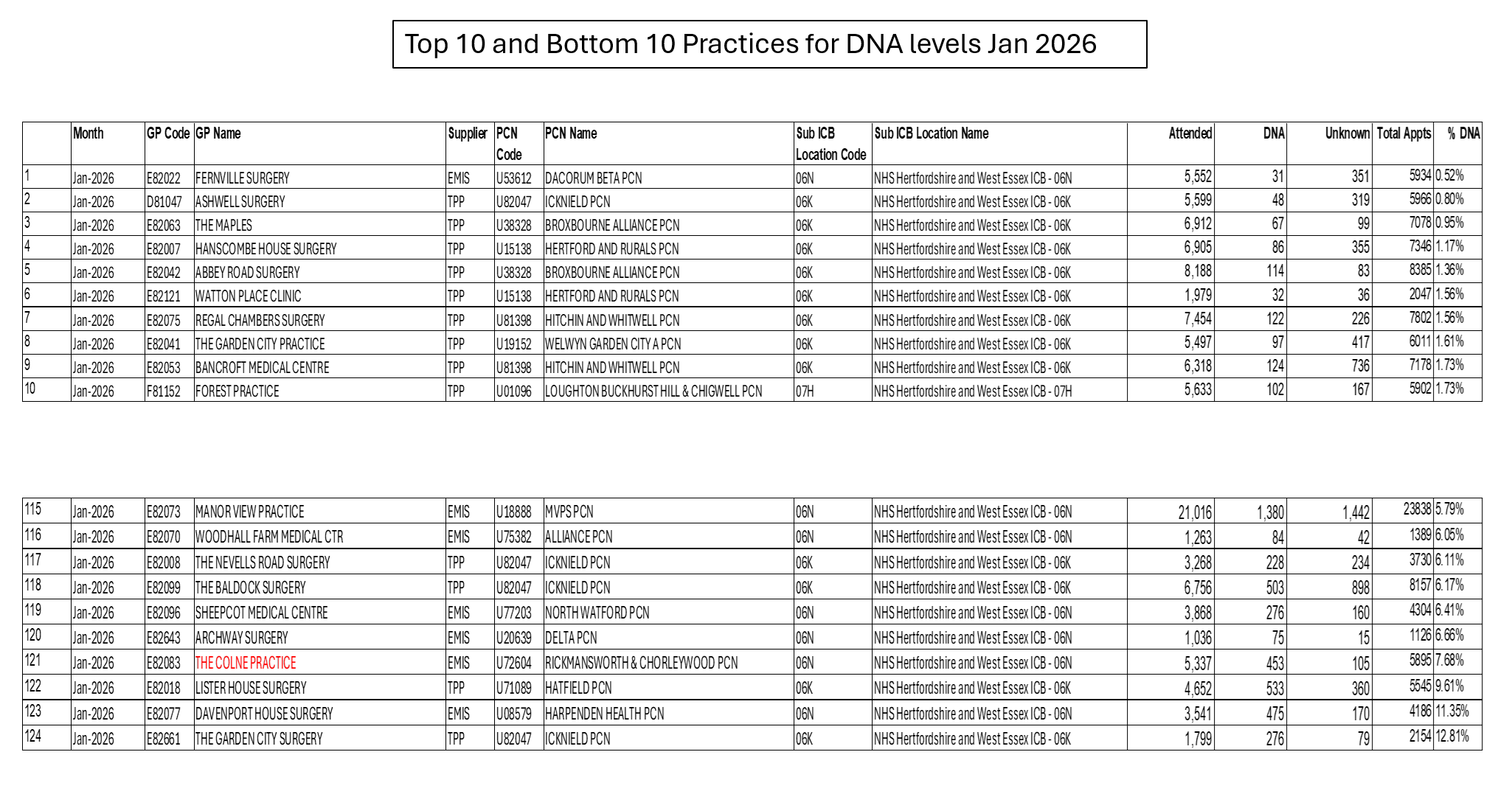
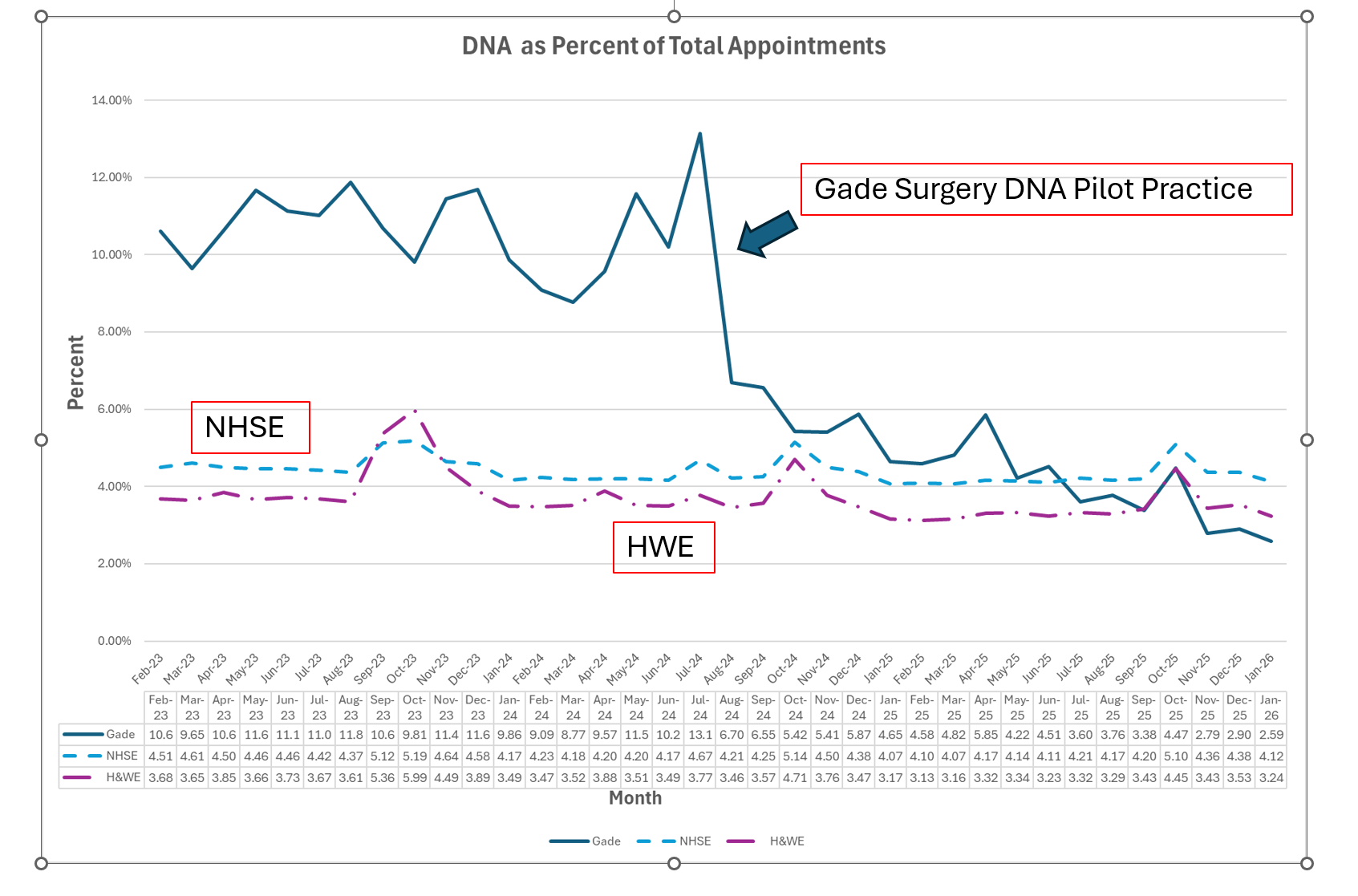
The team discovered the following issues
•1.Due to a data entry error figures reported to GPAD were too high and incorrectly logged
•2.Phlebotomists and Nursing staff had much higher levels of DNAs than GPs. Particularly concerning as nurse appointments were often 20 mins in length. Text messages to remind patients were reinforced.
•3.The biggest demographic by number of DNAs was the working population. Work commits and commuting problems make weekend appointment a preferred option.
•4.The text reminder and answering machine process was reviewed and updates to ensure patients knew of appointment and could more easily cancel if needed.
•5.Some frail patients found reaching the surgery difficult, a local charity providing lifts was engaged and promoted by the surgery.
•6.Some patients found car parking very difficult and frustrating. New Car Park control measures have been introduced.
.7 Social and economic deprivation was correlated with higher levels of DNA. Surgeries in these areas were more likely to be amongst those with the higher levels of DNAs. Appointments after pay day are more likely to be attended according to NHS analysis in secondary care.
8. Some patients were found to be manipulating the appointment booking system. Occasions when patients booked 3 or more appointment only to attend the appointment that suited them were discovered. Reception staff have been trained to recognise these events.
9. In the event that a patient failed to attend for 3 appointments some practices have adopted a red card system leading to a patient being excluded from future appointments. This project would recommend that such a situation be treated as a Safe Guarding need and an investigation initiated.