What is a neighbourhood health centre?
NHCs bring together GP practices and a mix of community, local authority, adult social care and civil society services, allowing staff to deliver more co-ordinated and effective care for better patient outcomes and experiences.
Centres will be expected to:
meet the expectation set out in the 10 Year Health Plan to be open at least 12 hours a day and 6 days a week providing access to coordinated services locally
include on-site general practice as a core element of the model, not solely GP staff or sessional input
As part of developing the neighbourhood health plan, health and wellbeing boards will be agreeing the geography (‘a neighbourhood’) around which services should be delivered. ICBs and regions should align their proposals with this work, and plan for NHCs to serve a population footprint at a scale in line with the Neighbourhood Health Framework (around 50,000, recognising the need for local flexibility), with General Practice at the core. We would generally expect GP services within an NHC to be operating at the scale of a PCN. We recognise of course that other types of services will operate best on different footprints. For example, Minor Diagnostics and UTCs are likely to operate better on a larger footprint, whilst Integrated Neighbourhood Teams, e.g. for frailty, will need to be operating at a neighbourhood level in most places. Proposals should show how the Centre improves integration, access and the range of neighbourhood services available locally, and should improve reasonable patient access to core services.
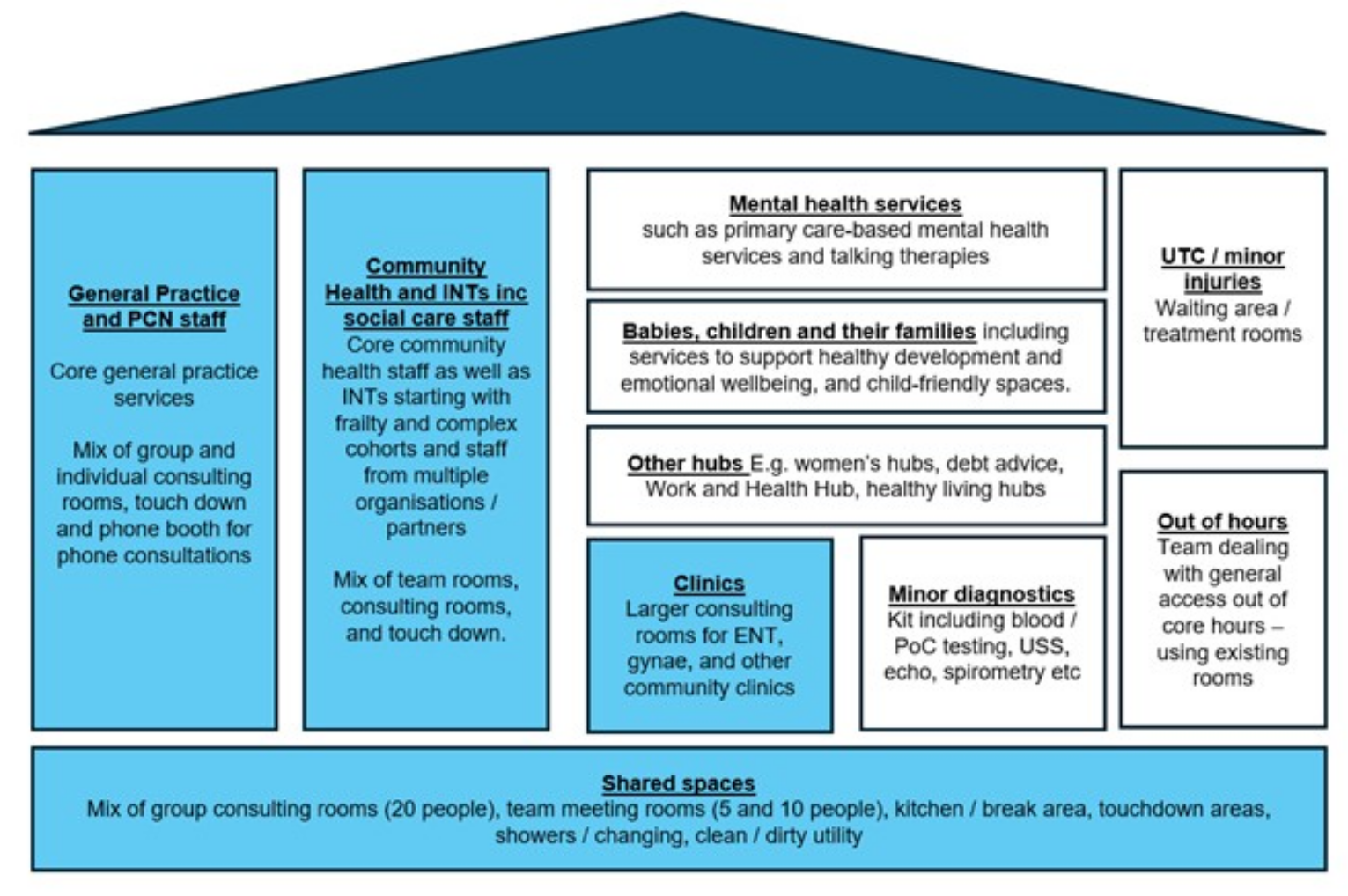
The infographic below outlines the core components expected in an NHC, with the shaded boxes identifying the minimum requirements for designation as an NHC. The specification explains and describes these more fully.